Breaking Free From FOMO: The Gen Z Guide To Smart Investments

Breaking Free From FOMO: The Gen Z Guide To Smart Investments

In a world increasingly driven by social media, which incessantly taps into the fear of missing out (FOMO), it is easy to get caught up in the vortex of keeping up with trends. Gen Z, born into this digital era, is no stranger to this psychological impulse. However, a growing segment of this population has flipped the script on FOMO. Instead of opting for fleeting moments of gratification, they channel their energy into investments that promise long-term growth and financial security.

From the 2008 financial crisis, demonetization, and the 2020 health crisis to the recessionary years that spanned the next three years, including the high-speed UPI transition, this generation has seen it all. Despite this economic roller-coaster ride, as per a CAMS study, about 52% of first-time mutual fund investors are Gen Zoomers. This makes them investors among the key growth drivers of the Indian economy.

This image describes the difference between Fomo spending Vs Investments via SIP.

Many young investors enter the financial market, not out of a deep understanding of the fundamentals, but rather due to a fear of being left behind. While terms like FOMO or YOLO (you only live once) give an adrenaline rush and fuel excitement, they are not without inherent risks, and vital financial decisions cannot be made on their account. This psyche can trick you into impulsive decision-making and make you susceptible to market volatility.

Gen Z does not only doom scroll on Instagram, but they are sitting on a goldmine of information and financial insights. According to a study conducted by the CFA Institute and the Financial Industry Regulatory Authority Investor Education Foundation (FINRA), 48% of Gen Zers named social media, and 30% named ‘finfluencers’ (financial influencers) as their primary go-to source for investment advice. 

In the context of investing, the human psyche of FOMO has drawn individuals to high-risk, high-reward assets like stocks and cryptocurrencies. This motivates them to leverage investing apps like Stack’D to invest small amounts and watch it accrue compound interest. This generation of aspiring investors is navigating the challenges of the modern investment landscape responsibly. They are – 

  • Resisting the tunnel vision of short-term market hype 
  • Focusing on time-tested investment principles forging a long-term mindset
  • Diversifying portfolios for wider market exposure
  • Taking a disciplined approach to regular investing

As with any generation, Gen Zers have a different perspective on investing. While the millennial generation prioritizes necessity and savings over expenses, Gen Z focuses on wealth creation and early retirement. This is a generation of risk-takers and experimenters who dive headfirst into capital markets and stocks. They are all about living life to the fullest while being mindful of their finances.

Stepping up the financial game can be complex, especially for Gen Z, amid rising living costs and unprecedented economic shifts. Let’s take a peek into Gen Z’s guide to securing their future:

Key Budgeting Strategies For Wealth Creation - This image showcases the difference between 50/30/20 rule and 20-20-60 model for investments.

Start investing early to enable your money to compound. Even modest investments can grow and form substantial wealth over time. You can simply start by setting up SIPs on Stack’D and watch your wealth grow on autopilot mode.

Embrace ‘Loud Budgeting’, a concept that frees you from the societal pressure of spending money and gain control over your finances.

Diversify your portfolio across stocks, bonds, mutual funds, and ETFs via SIPs to limit the influence of market volatility.

Stay financially literate and keep your finger on the pulse of emerging investment opportunities and changes in financial laws.

While Gen Z leads an experience-oriented and dynamic lifestyle, find a balance between living in the moment and building a strong financial foundation.

Choose JOMO (joy of missing out) over FOMO, because impulsive purchases only create short-lived gratification and financial burnout over time. On the other hand, investing in Systematic Investment Plans (SIPs) can pave the path for goal-oriented investments and financial discipline. 

No matter the avenue, this generation is determined to chart their territory toward wealth accumulation. Gen Z is rewriting the rules of financial success by prioritizing investments over splurges. So, what would your move be: keeping up with the fleeting trends or investing in a future that sets you apart?  

Disclaimer: Mutual Funds investments are subject to market risk. Please read all the scheme-related documents carefully. 

  1. What are some common challenges you might face while starting your investment journey?

While young investors are keen on investing, the investment journey is not without its hurdles: 

  • Risk Aversion: Given the volatile nature of the markets and the lack of a holistic understanding of risk management, the fear of losing money can deter first-time investors. 
  • Financial Literacy Gap: A lack of financial knowledge and investment-centric conversations can cause a gap in understanding. 
  • Limited Financial Resources: Student loans, debts, entry-level salaries, and tight budgets are factors that leave little room for investments. It can also create a misconception that investing is only for the wealthy, causing young adults to delay starting their investment journey.
  • Influence Of Social Media: Social media can create unrealistic expectations of quick wealth, leading to impulsive and uninformed investment decisions.
  • Navigating Tax Implications: Understanding the complexities of how investment impacts taxes, capital gains, or deductions can be confusing for first-timers, leading to unexpected liabilities.
  1. How does technology empower Gen Z to make smarter financial decisions?

The tech-savvy generation largely depends on technology to make informed financial decisions. 

  • Technology has lowered the entry barrier and increased accessibility to investments.
  • Technology has democratized access to financial knowledge, offering engaging lessons on personal finance, investments, taxes, budgeting, and other financial concepts while also enabling individuals to learn at their own pace. 
  • User-friendly financial apps like Stack’D help in simplifying complex financial processes.
  • The marriage of finance and technology has led to data-driven decisions, providing users with insights into spending habits, credit health, and investment opportunities.

Why Early SIP Investments Are The Best Gift To Your Future Self

Why Early SIP Investments Are The Best Gift To Your Future Self

Benjamin Franklin said – “Time is money.” Truer words have never been spoken!

Getting that OTT subscription, buying those concert tickets, shopping online—the common thread connecting these analogies is that you would spend on these expenses without a second thought. So why would you put off investing in your future security while waiting for a higher income or the ‘right time’?

When it comes to financial growth, the right time is now. In fact, the earlier you start, the better. For every novice investor faced with the dilemma of making a lumpsum investment, that is not the only option. When you start investing on Stack’D, you can set aside a small amount of money and watch it grow slowly and steadily, thanks to Systematic Investment Plans (SIPs). 

SIPs offer a simple yet powerful way to build your wealth over time. They enable investors to invest a fixed sum of money in a fund scheme at predefined intervals, which can be monthly, quarterly or annually. This form of investment supports a structured investing approach, fostering financial discipline and yielding significant returns over a long time.

Benefits of starting your SIP today

Note that while the SIP amount is fixed, the net asset value (NAV) of mutual fund units varies on a daily basis. Here’s why you should take the plunge and start your SIP journey today – 


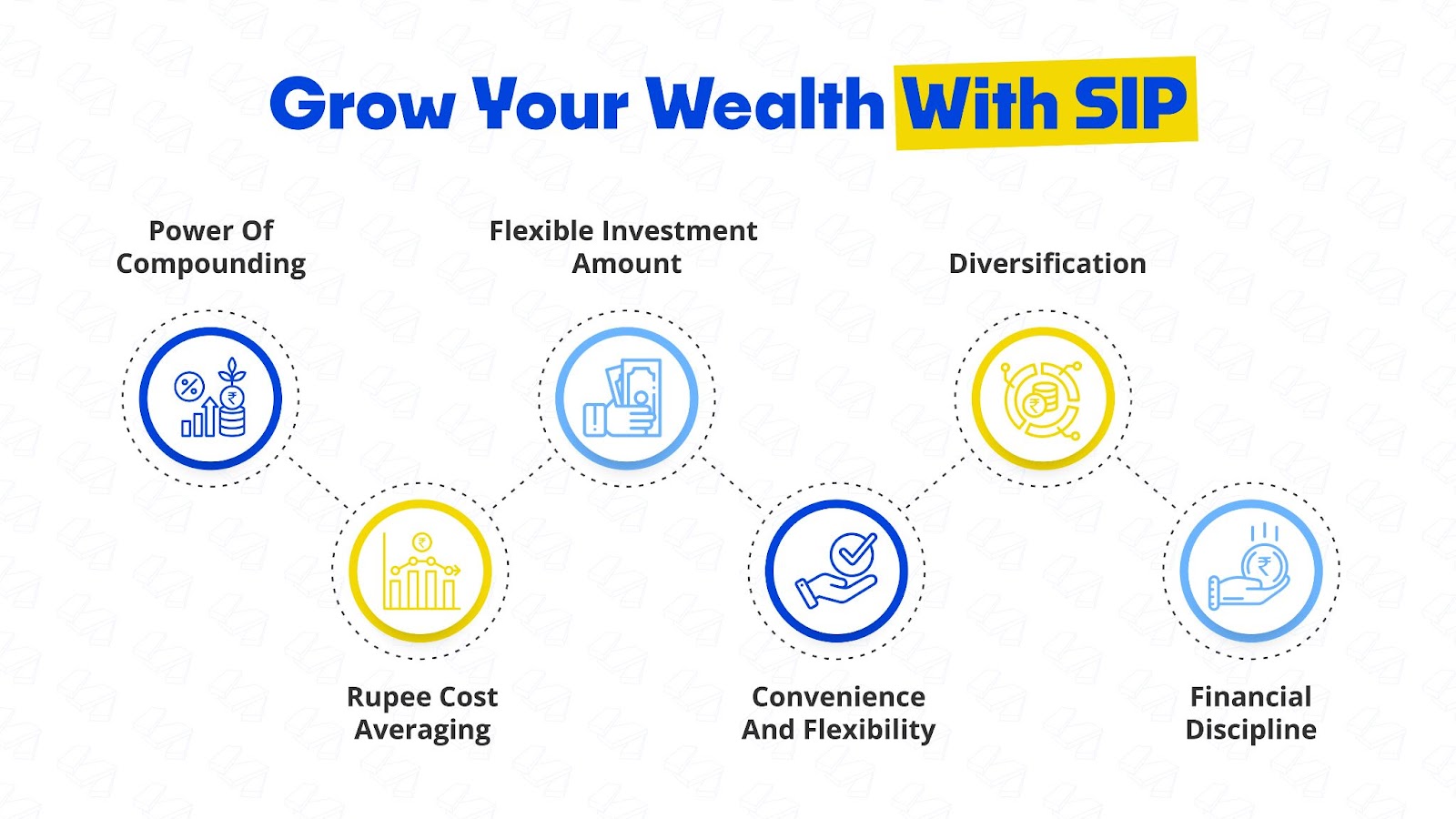
  • Power Of Compounding – Compounding is like planting a seed; the earlier you plant it, the more time it gets to grow. Investing is the same – when you invest in your 20s, your wealth gets a good headstart to earn returns and multiply. With regular investments through SIPs, your returns can again be reinvested, resulting in exponential growth.
  • Rupee Cost Averaging – Inspired by Dollar Cost Averaging, the principle of Rupee Cost Averaging allows you to purchase a higher number of units when a fund’s NAV is low and a lesser number of units when the NAV is high, reducing the impact of market volatility. This benefit of SIP ensures the cost of purchasing mutual fund units averages out the SIP’s tenure. An ideal way to maximize your gains is to invest for an extended period.
  • Flexible Investment Amount – When investing in SIPs, you have the liberty to choose the amount you want to invest. It doesn’t have to pinch your pocket. You can start with just Rs. 500 every month. Some mutual fund companies have even reduced the minimum Daily Systematic Investment Plan amount to Rs. 100. SIPs are affordable to investors with varied budgets. 
  • Convenience And Flexibility – SIPs are hassle-free, automated, and can be tailored based on your goals and budget. You can also easily modify the SIP amount, pause it, or stop it at any time, giving you complete control over your investments.
  • Diversification – You don’t have to put all your eggs in one basket. There is no limit to the number of SIPs or mutual funds you can invest in at the same time. You can invest in different mutual fund schemes. 
  • Financial Discipline – When you start investing at an early age, it makes you more financially disciplined. This means you are developing a habit of saving money and are better placed to make your money grow. The fact that SIPs are automated ensures you put aside some money every month, even if your income fluctuates. 

Your 20s are a golden decade to invest in dreams, security, and freedom. It is also the best time to work towards financial independence and start an SIP. Wondering why? Because your financial responsibilities are fewer compared to later stages, and waiting will only make your goals more expensive. 

Utilize this phase to create a strong financial foundation. The earlier you start, the bigger the rewards. Taking small, consistent steps to build your wealth is the key.

Disclaimer: Mutual Funds investments are subject to market risk. Please read all the scheme-related documents carefully. 

Frequently Asked Questions –

  1. How does SIP work?

Setting up your SIP mandate is an easy process. 

  • Do your research on mutual fund schemes and choose one that aligns with your long-term financial goals and risk tolerance. 
  • Fill out a form and provide the personal information and bank details required for automatic deductions. 
  • Decide the amount you want to invest every month, which will be automatically deducted from your bank account and invested in the chosen mutual fund.
  • You can also track your mutual funds investments through the Stack’D app or through the fund’s website.
  1. What is the difference between SIPs and lumpsum investments?

SIPs and lumpsum investments are two different approaches to investing in mutual funds. 

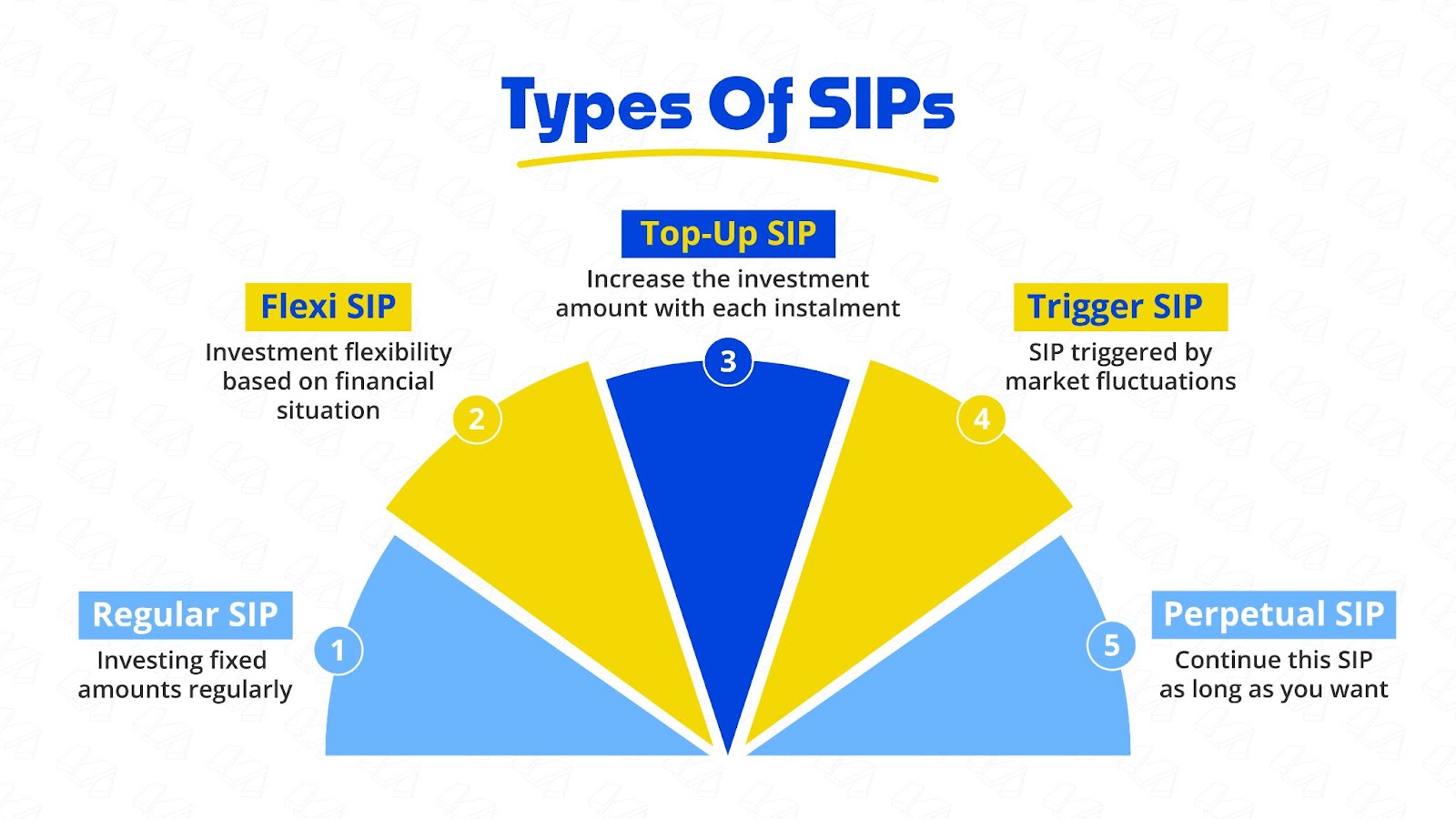
SIPs constitute investing a small fixed amount into a mutual fund. The investment amount and frequency can be changed over time, but the investment duration remains fixed. SIPs play a key role in instilling financial discipline and saving habits with long-term investments.

Lumpsum investments, on the other hand, require a one-time investment of a large sum of money into a mutual fund. This type of investment is ideal for individuals who have a large sum of money available or those who want to invest in one go. While a lumpsum investment has the potential to yield higher returns, there is also a higher risk associated with it, as it is subject to market fluctuations. 

  1. Things to consider before investing in SIPs?

It is essential to do your research before you start investing to ensure you make the right financial decision. Here are a few things to consider before you invest in SIPs:

  • Establish your investment goals in advance. Whether it is funding education, buying a home, or planning your retirement, list down your financial goals.
  • Different mutual funds have varying risks and returns. Determine your risk appetite accordingly. For instance, Equity funds are riskier but yield higher returns, whereas conservative funds like debt funds are more stable with moderate returns.
  • Since SIPs are affordable and flexible, you can determine your investment amount without compromising your financial stability. You can even increase that amount based on a rise in your earnings.
  • The expense ratio is the annual fee that mutual funds charge for managing your investments. Therefore, before you opt for a mutual fund, it is wise to consider the expense ratio, as high fees can often eat into your returns.
  • Beware of taxation on mutual funds. The tax liability on mutual fund investments varied depending on its type and duration. It is advisable to consult a financial advisor or tax professional to understand the best approach.